Just published – our new publication in Science and Education

We are pleased to share the publication of a new article by our research group in Science & Education:

Ben Simon, H., Pshenichny-Mamo, A., & Tsybulsky, D. (2026). Teaching nature of science: A pedagogy of practice framework for teachers’ professional development. Science & Education. https://doi.org/10.1007/s11191-026-00750-8

The article presents a practice-based pedagogical framework for supporting science teachers’ professional development in teaching the Nature of Science (NOS).

The study explores how teachers incorporated NOS instruction into their classrooms through authentic, reflective, and context-based teaching practices. The findings demonstrate how teachers adopted and adapted new pedagogical strategies for NOS instruction, with storytelling-based approaches emerging as particularly meaningful and engaging for both teachers and students.

This work contributes to ongoing research and practice in science teacher education and offers new insights into effective approaches for supporting NOS teaching in schools.

Welcoming Haifa’s STEM Leadership

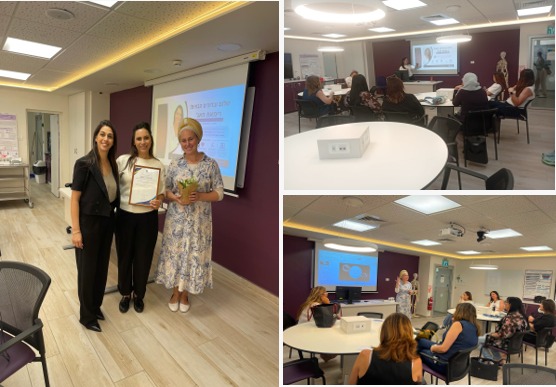
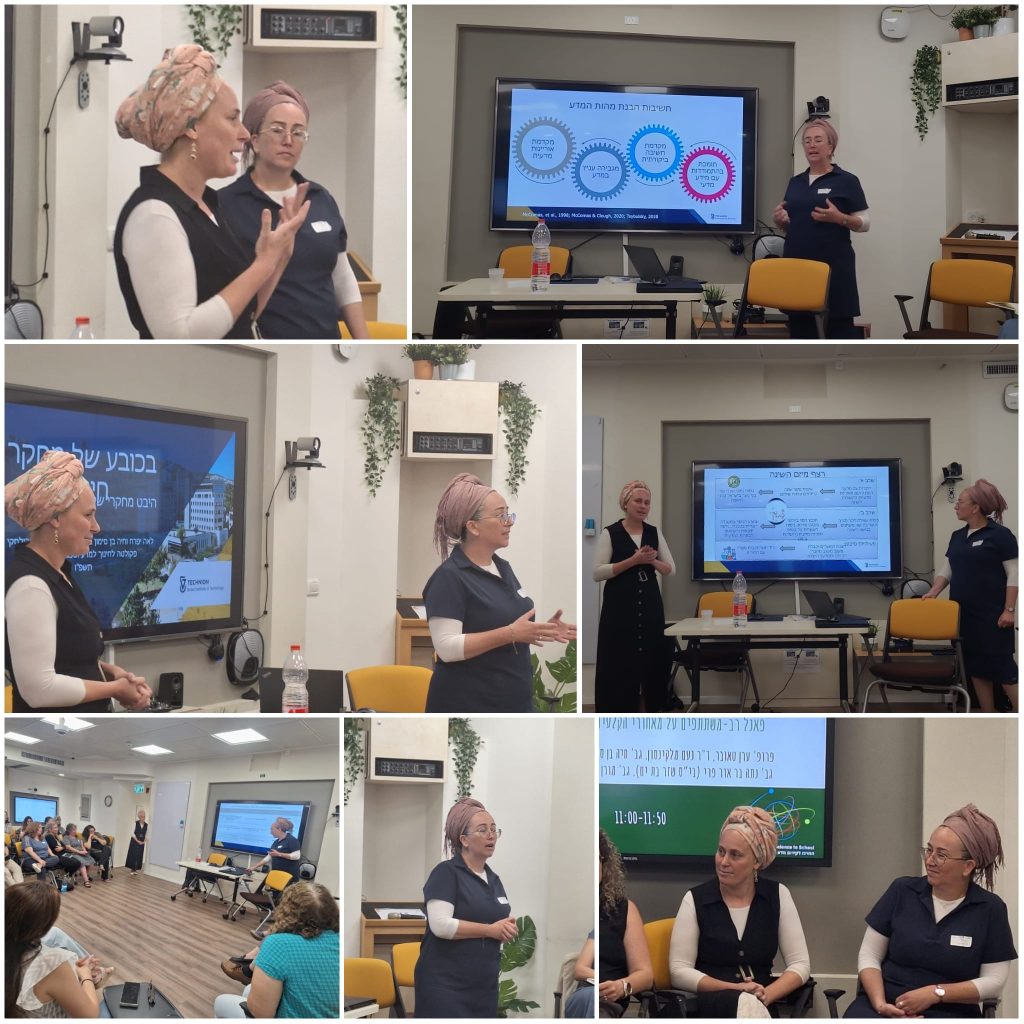
Today, we were pleased to host a delegation from the Haifa District, led by representatives from the STEM supervision team and educational leadership, at our Smart BioEd Lab. During the visit, we presented our research focus on bridging between the culture of science and the worlds of learners and teachers through authentic and meaningful learning contexts. The delegation was introduced to our work on digital curation, and teacher professional development, as well as to our citizen science Sleep Project. The visit also highlighted our lab’s role in connecting research with practice through collaborations with schools, teacher communities, and pre-service teachers. We are grateful for this opportunity to share our work and look forward to future collaborations with the Haifa educational community.


Presenting our “Sleep” Citizen Science research at three conferences

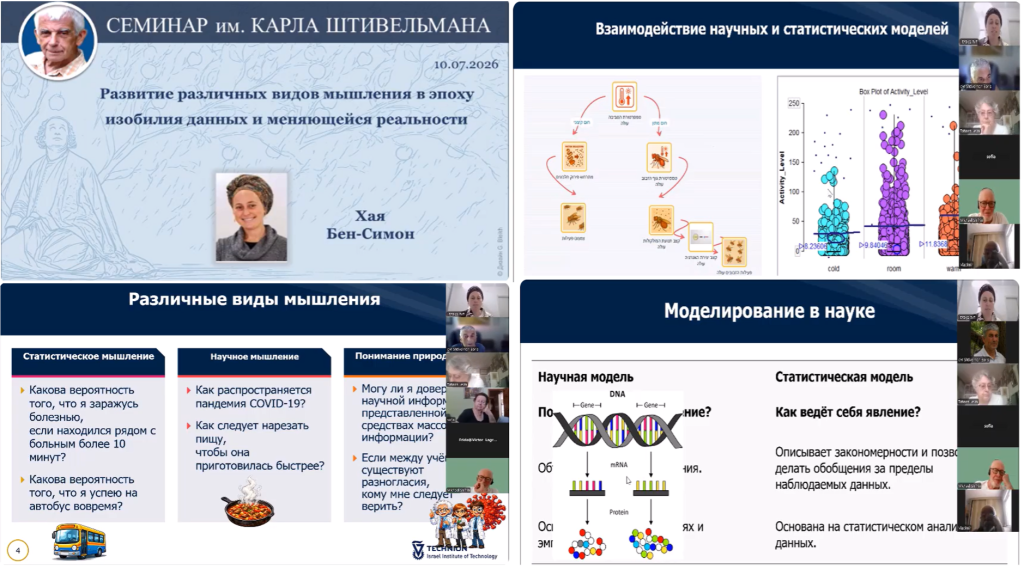
We are happy to share that we presented our research on the “Sleep” Citizen Science Project at three conferences: the NARST Online Conference, the ILANIT Conference and the Annual Conference of the Israeli Center for Citizen Science.

We are grateful for the engaging discussions, the interest in this work, and the opportunity to be part of such meaningful scientific communities.

Ben Simon. H, L., & Tsybulsky, D. Learning about science by doing real science: fostering NOS understanding through citizen science. NARST2026 Online Conference. Seattle, Washington, April 2026. Oral presentation.

Ben Simon, H. & Tsybulsky, D. Engaging students with citizen science: Gateway to new scientific frontiers. ILANIT2026 Conference. Eilat, Israel, February2026. Oral presentation.

Yifrach. L.  & Tsybulsky, D. Sleep project: Investigating sleep from humans to drosophila as a biological model. Annual Conference of the Israeli Center for Citizen Science, The Steinhardt Museum of Natural History, February  2026. Oral presentation.

Just published – our new publication in DISER

Excited to share our new publication!

In this study, we explore how epistemic emotions, such as confusion, curiosity, and enjoyment, unfold and function within socio-scientific issue learning through digital curation. Our findings highlight a clear emotional trajectory: from initial uncertainty and tension toward curiosity, engagement, and meaningful knowledge construction.

Importantly, we show that these emotions are not just by-products of learning, but integral to it – serving both as markers of cognitive processes and as mechanisms that drive inquiry, evaluation, and collaborative sensemaking.

Kudos to Remah Haj for this fascinating research, conducted as part of her doctoral work!

Haj, R. & Tsybulsky, D. (2026). From confusion to curiosity: epistemic emotions in socio-scientific issue learning through digital curation. Disciplinary and Interdisciplinary Science Education Research. Special Issue on SSIs. https://doi.org/10.1186/s43031-026-00157-z

Congratulations to Haya Ben Simon on the Jacobs Excellence Scholarship

We are delighted to congratulate Haya Ben Simon on being awarded the Jacobs Excellence Scholarship (2026).

This prestigious scholarship recognizes academic excellence and outstanding promise, and reflects Haya’s dedication, scholarly achievements, and meaningful contributions to research. We are proud of her accomplishment and wish her continued success in her academic journey.

Congratulations to Gal Stern on the NARST 2026 International Travel Award

We are delighted to congratulate Gal Stern on being selected to receive a NARST 2026 International Travel Award, supporting her travel to the NARST2026 Annual International Conference.

At the conference, Gal will present her accepted oral paper:
Stern, G. & Tsybulsky, D. (2026). From collecting to designing: Integrating AI into digital curation for personalized science education.
NARST 2026 Conference, Seattle, USA, April 2026.

 We are proud of her achievement and look forward to her presentation at NARST 2026.

Just published – Our New Article in Smart Learning Environments

I’m delighted to share that our article, “Critical Ignoring Reimagined: Insights from STEM Digital Curation on Wikimedia Platforms,” has been published in Smart Learning Environments.

Led by Shani Evenstein Sigalov, this study revisits the concept of critical ignoring and extends it through an in-depth qualitative analysis of experienced Wikimedians engaged in STEM digital curation on Wikipedia and Wikidata. The findings show how the original strategies of critical ignoring (self-nudging, lateral reading, and “don’t feed the trolls”) are enacted and sustained in real-world, collaborative knowledge production.

Importantly, the study identifies additional motivational and contextual dimensions that support critical ignoring over time, highlighting its role as a sustained, socially embedded practice rather than a momentary evaluation skill.

👉 Read the article here:

Evenstein Sigalov, S. & Tsybulsky, D. (2026). Critical ignoring reimagined: Insights from STEM digital curation on Wikimedia platforms. Smart Learning Environments, 13:4, 1-32. https://doi.org/10.1186/s40561-026-00432-6

🎥 You can also watch a short AI-generated video overview here: 


Just published in Springer – Our New Book Chapter

We are excited to share that our new book chapter has been published!

The chapter examines the educational goals that natural history museum staff associate with climate change exhibitions and analyzes how different aspects of nature of science are integrated into exhibition content. By focusing on museum professionals’ perspectives alongside an analysis of the exhibitions themselves, the study highlights the pedagogical potential of natural history museums as authentic learning environments that can complement formal biology and climate change education.
📘 The chapter is available here:
https://link.springer.com/chapter/10.1007/978-3-032-05346-6_7

Pshenichny-Mamo, A., Demarse, M., Hunter, R.H. & Tsybulsky, D. (2026). Exploring the educational potential of climate change exhibitions in natural history museums. In C. Bruguière, M. Hammann & O. Morin (Eds.), Shaping the Future of Biological Education Research. Contributions from Biology Education Research (pp. 87-101). Springer. https://doi.org/10.1007/978-3-032-05346-6_7

🌙 Sleep Citizen Science Project in Our Lab

🎶Do different types of music influence sleep?
🌡️ How does temperature affect sleep patterns?
💡 How does exposure to different light colors and varying light intensities affect fly activity?
📊 And what happens when sleep is disrupted—how does the body recover?

These questions emerged from an inquiry process led by students in grades 8–11 as part of a Sleep Citizen Science project. The students analyzed their own sleep data alongside large-scale sleep data from adolescents across Israel, identified patterns, variability, and potential relationships, and formulated research hypotheses.

They then moved to an additional scientific practice: a controlled biological experiment. Through their statistical analyses, students identified meaningful trends and generated hypotheses that they sought to examine through experimental scientific inquiry. Fruit flies serve as a model organism for the study of human sleep due to similarities in genes related to the biological clock. To explore their questions, the students visited our fly laboratory at the Technion, separated male flies from females, placed individual flies into capillary tubes, and inserted them into a dedicated monitoring system that tracks activity levels and enables the identification of sleep and wake periods.

The flies were subjected to different treatments according to the students’ research questions: some were maintained at different temperatures, others were exposed to classical music or trance music at varying sound intensities, some experienced different colors and intensities of light exposure, and in some cases, sleep was deliberately disrupted. In addition, the students prepared fly food and designed further experiments using diets with varying protein-to-carbohydrate ratios.

The analysis yielded many fascinating answers but also generated many new questions. One striking finding was that music, regardless of genre, significantly reduced fly activity. Whether exposed to classical music or trance, the flies became markedly less active, and this effect intensified as music volume increased. After engaging in deeper scientific reading, the students proposed that flies may not “hear music” in the human sense, but instead interpret sound vibrations as potential danger, triggering a protective response that suppresses movement. This interpretation led to a broader scientific question: since fly hearing differs substantially from human hearing, flies detect a narrower frequency range and are primarily sensitive to vibrations, to what extent can findings from this model organism be generalized to human sleep?

In other areas, however, the flies revealed intriguing parallels to humans. Similar to humans, flies exposed to stronger light intensity demonstrated increased alertness and activity. Students also found that flies were more energetic and survived better when consuming a balanced combination of protein and carbohydrates, echoing patterns seen in human health. In experiments involving sleep disruption, more energetic flies (“healthy”) tended to remain active after sleep interruption, whereas less active flies (“weak” or “sick”) were more likely to return to sleep, raising new questions about resilience, recovery, and individual differences.

Based on findings, the students constructed scientific models to explain the mechanisms underlying the phenomena they investigated, alongside statistical models to describe patterns, trends, and variability in their data. They later presented their findings to sleep scientist Prof. Eran Tauber, received expert feedback, and refined their interpretations accordingly.

At this stage, our central question has become even more profound: Where does our model organism, the fruit fly, help us better understand sleep, and where does it limit that understanding? Ultimately, this project has not only deepened students’ understanding of sleep, but also of one of science’s most important practices: using models to investigate reality while critically recognizing both their explanatory power and their limitations.