Hosting Education Leaders from the Northern District at Our Lab

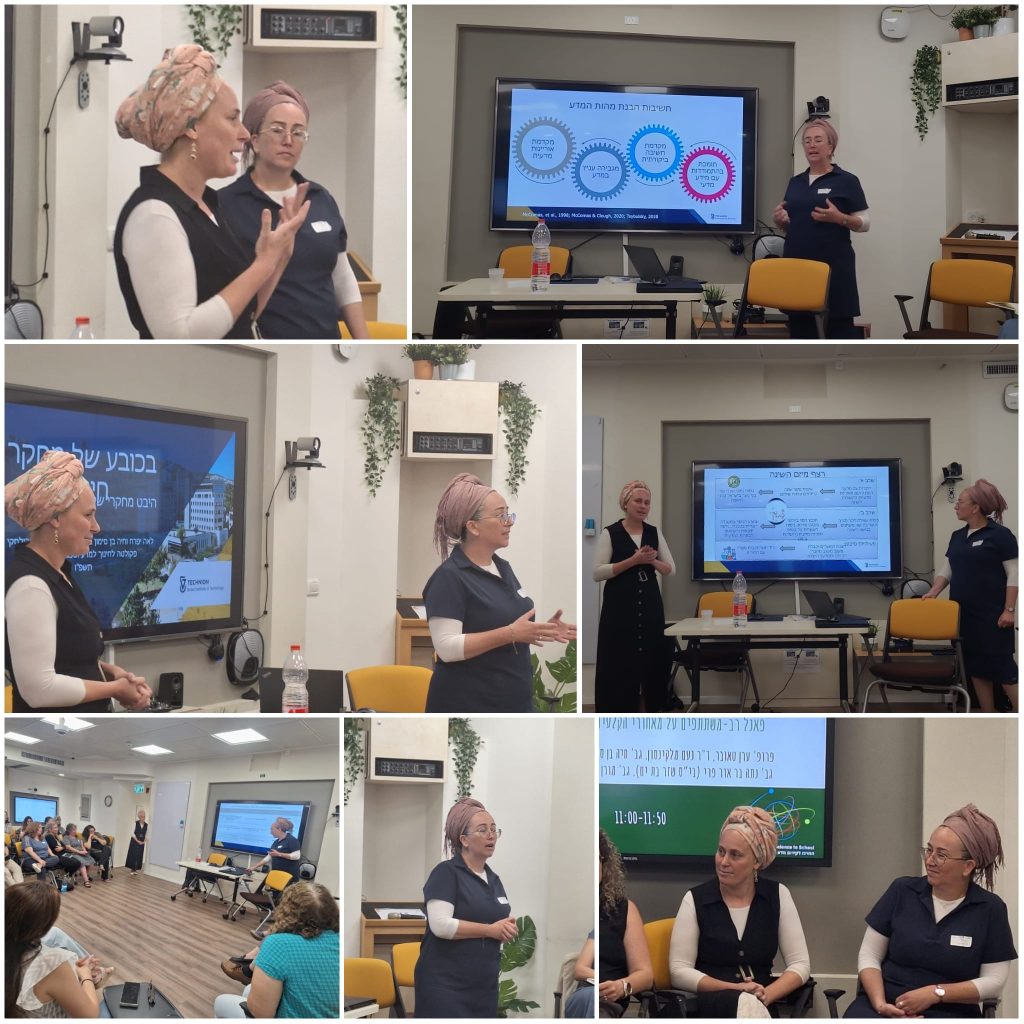
We were delighted to host education inspectors from the Northern District of the Special Education Administration and the Society and Youth Administration at our Smart BioEd Lab.

During the visit, we presented a variety of research projects conducted in our lab, including studies examining the epistemic emotions that arise during participation in the digital curation process, as well as studies investigating the development of scientific reasoning, statistical reasoning, and Nature of Science understanding among students participating in a citizen science sleep project.

We were delighted by the great interest shown by both groups and by their enthusiasm for promoting future collaborations that will enable many more students to visit the Smart BioEd Lab, participate in authentic scientific research, and experience science firsthand.

We thank our guests for their inspiring visit and look forward to continuing our collaboration.
Fly Sleep Project Presented at the TCSS Annual Conference

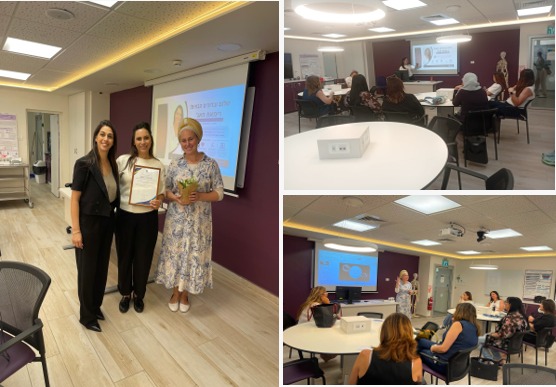
At the recent annual conference of the TCSS center, held at the University of Haifa, our research group was pleased to present findings from our ongoing research on the Fly Sleep citizen science project.

Our presentation focused on how participation in the project supports students’ development of Nature of Science understanding, scientific reasoning, and statistical thinking through authentic citizen science experiences. It was a pleasure to share our work with teachers, scientists, and educational researchers, and to contribute to the ongoing conversation about the potential of citizen science to advance meaningful science education.

Bridging Theory and Practice in Science Education: Paper presenatation at IHPST 2026

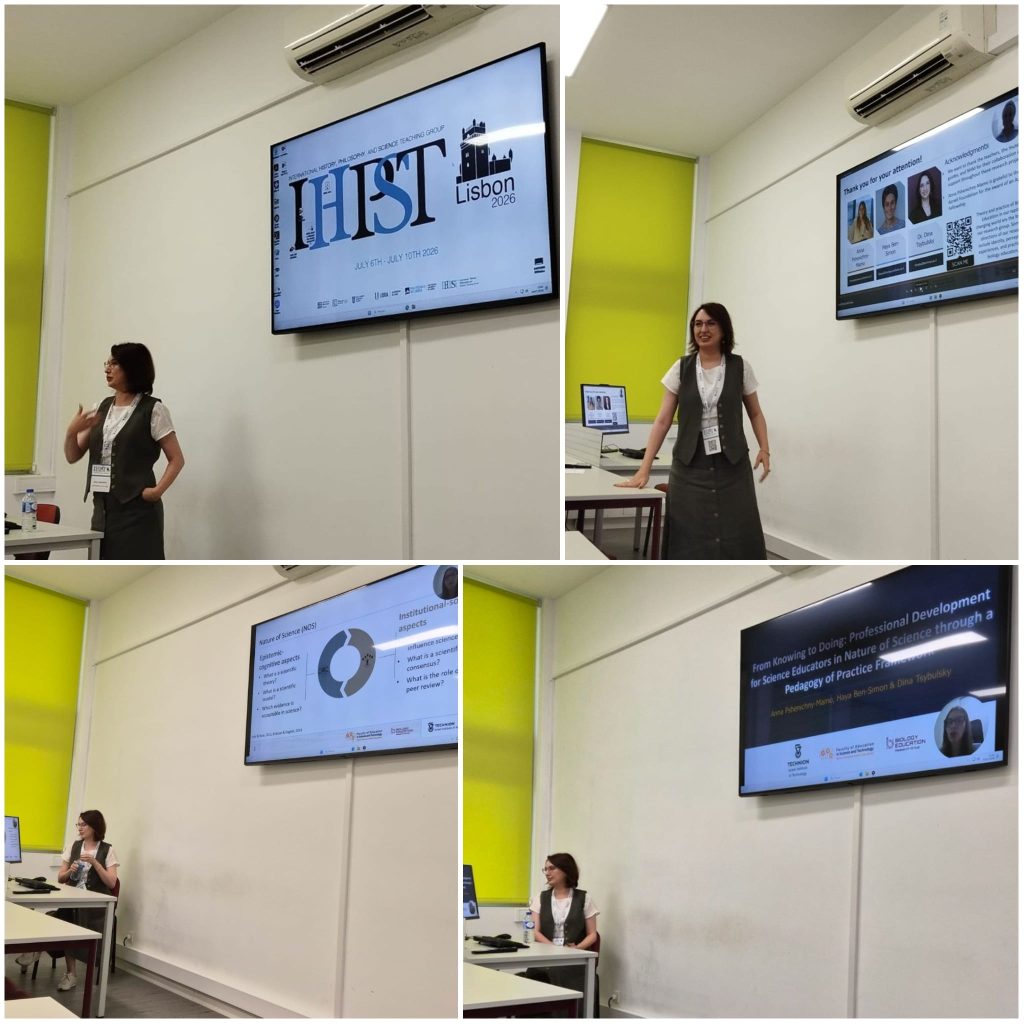
At the recent IHPST 2026 conference in Lisbon, our research group was delighted to present our work on how the Pedagogy of Practice framework can guide professional development to help science educators implement Nature of Science in their instruction.
Our presentation synthesized findings from two of our group’s complementary studies, examining in-service science teachers on the one hand and natural history museum guides on the other. Despite working in very different environments, both groups of educators benefited significantly from this practice-based approach. The framework helped them bridge the critical gap between understanding Nature of Science as an abstract concept and actively and meaningfully integrating it into their daily educational practice.
These joint findings suggest that the Pedagogy of Practice offers a highly transferable model for preparing educators to foster richer, more authentic scientific literacy in both formal and informal settings. It was a privilege for our team to share these insights and to engage in inspiring dialogues with international colleagues working at the vital intersection of the history, philosophy, and teaching of science.

Pshenichny-Mamo, A., Ben Simon. H, & Tsybulsky, D. From knowing to doing: professional development for science educators in nature of science through a ‘pedagogy of practice’ framework. IHPST2026. Lisbon, Portugal, July 2026. Oral presentation.

Congratulations to Anna Pshenichny-Mamo on Completing Her Azrieli Fellowship

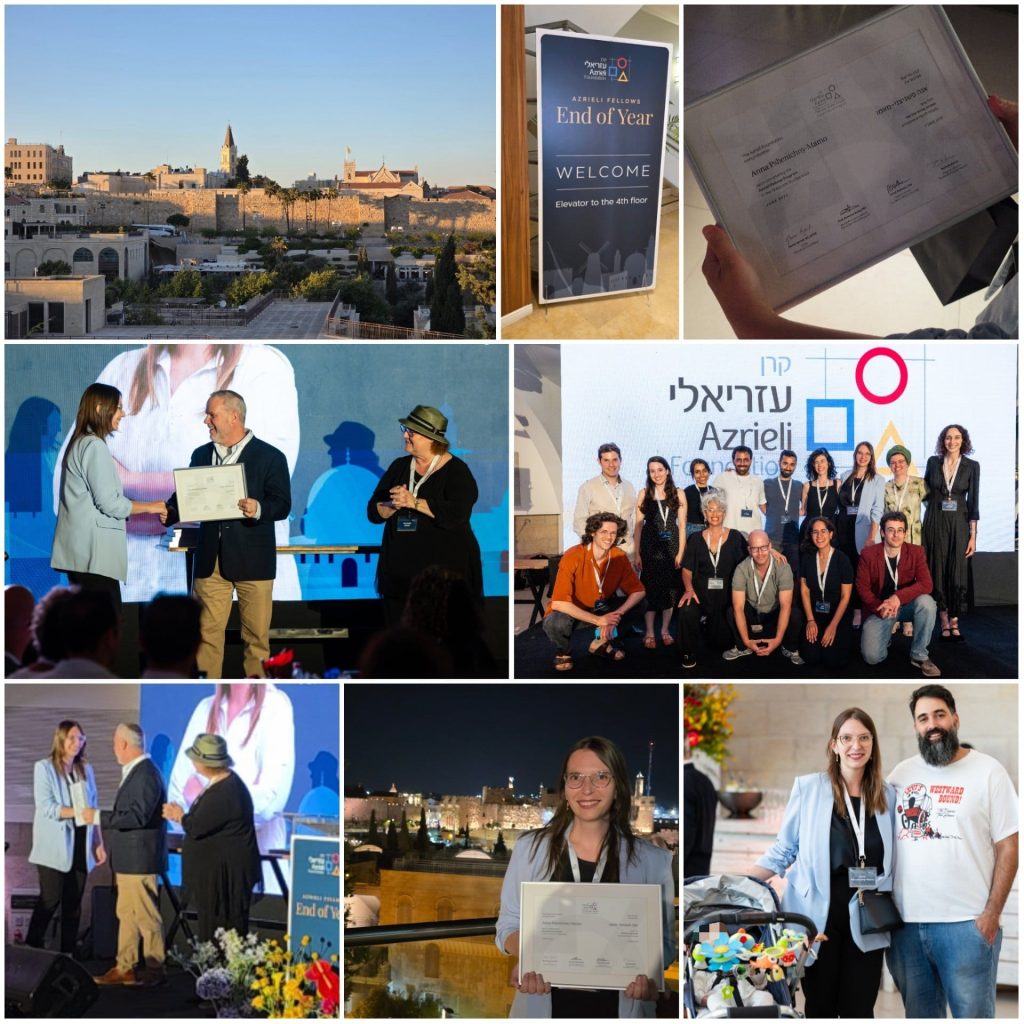
At the Azrieli Fellows End-of-Year Gathering, Ph.D. candidate Anna Pshenichny-Mamo marked the completion of her three-year Azrieli Graduate Studies Fellowship.

The fellowship has supported her doctoral research throughout the past three years. Anna expressed her gratitude to the Azrieli Foundation, the program team, and the fellows community for their continuous support and inspiring collaborations. She now joins the Azrieli Alumni community and looks forward to the next stage of her academic career.