🎶Do different types of music influence sleep?
🌡️ How does temperature affect sleep patterns?
💡 How does exposure to different light colors and varying light intensities affect fly activity?
📊 And what happens when sleep is disrupted—how does the body recover?
These questions emerged from an inquiry process led by students in grades 8–11 as part of a Sleep Citizen Science project. The students analyzed their own sleep data alongside large-scale sleep data from adolescents across Israel, identified patterns, variability, and potential relationships, and formulated research hypotheses.
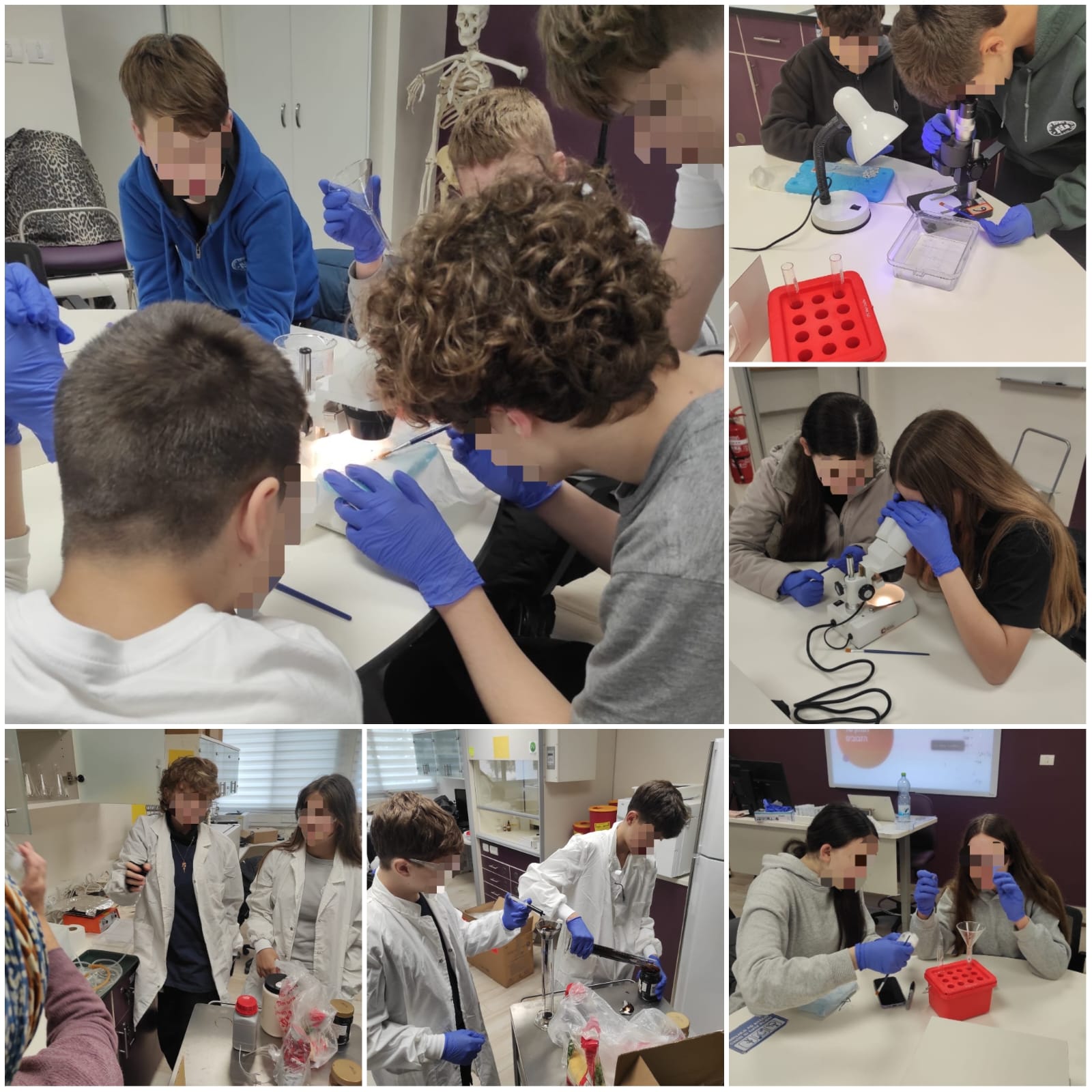
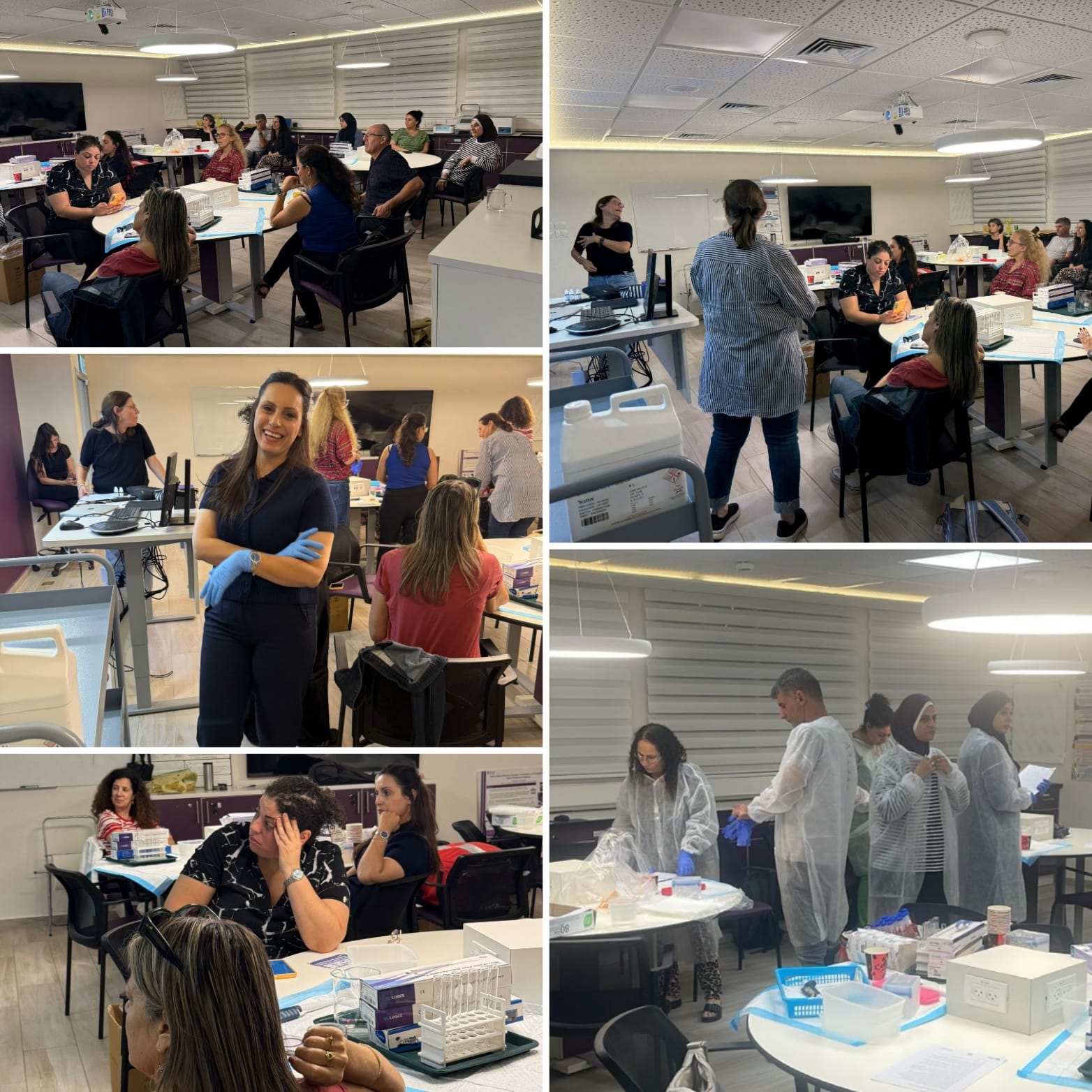
They then moved to an additional scientific practice: a controlled biological experiment. Through their statistical analyses, students identified meaningful trends and generated hypotheses that they sought to examine through experimental scientific inquiry. Fruit flies serve as a model organism for the study of human sleep due to similarities in genes related to the biological clock. To explore their questions, the students visited our fly laboratory at the Technion, separated male flies from females, placed individual flies into capillary tubes, and inserted them into a dedicated monitoring system that tracks activity levels and enables the identification of sleep and wake periods.
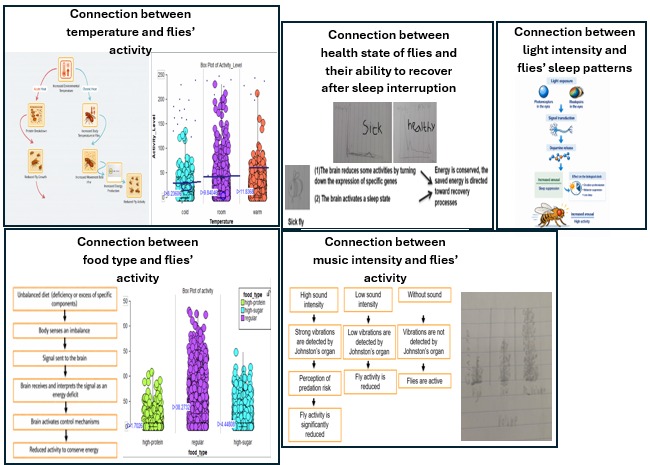
The flies were subjected to different treatments according to the students’ research questions: some were maintained at different temperatures, others were exposed to classical music or trance music at varying sound intensities, some experienced different colors and intensities of light exposure, and in some cases, sleep was deliberately disrupted. In addition, the students prepared fly food and designed further experiments using diets with varying protein-to-carbohydrate ratios.
The analysis yielded many fascinating answers but also generated many new questions. One striking finding was that music, regardless of genre, significantly reduced fly activity. Whether exposed to classical music or trance, the flies became markedly less active, and this effect intensified as music volume increased. After engaging in deeper scientific reading, the students proposed that flies may not “hear music” in the human sense, but instead interpret sound vibrations as potential danger, triggering a protective response that suppresses movement. This interpretation led to a broader scientific question: since fly hearing differs substantially from human hearing, flies detect a narrower frequency range and are primarily sensitive to vibrations, to what extent can findings from this model organism be generalized to human sleep?
In other areas, however, the flies revealed intriguing parallels to humans. Similar to humans, flies exposed to stronger light intensity demonstrated increased alertness and activity. Students also found that flies were more energetic and survived better when consuming a balanced combination of protein and carbohydrates, echoing patterns seen in human health. In experiments involving sleep disruption, more energetic flies (“healthy”) tended to remain active after sleep interruption, whereas less active flies (“weak” or “sick”) were more likely to return to sleep, raising new questions about resilience, recovery, and individual differences.
Based on findings, the students constructed scientific models to explain the mechanisms underlying the phenomena they investigated, alongside statistical models to describe patterns, trends, and variability in their data. They later presented their findings to sleep scientist Prof. Eran Tauber, received expert feedback, and refined their interpretations accordingly.
At this stage, our central question has become even more profound: Where does our model organism, the fruit fly, help us better understand sleep, and where does it limit that understanding? Ultimately, this project has not only deepened students’ understanding of sleep, but also of one of science’s most important practices: using models to investigate reality while critically recognizing both their explanatory power and their limitations.